
About Us
We don’t just work — we care.
At Happy Days Care, we start from a simple belief: recovery isn’t something that happens to you in a clinic — it happens in your life, with your people, doing things that actually feel like living again.
Most support services are built to manage a condition. We’re built to help you rebuild a life around it.
That’s a different job, and it needs a different approach. So we built ours around community. Every week, there’s a full program to book into — morning coastal walks, group breakfasts, gym sessions, surf lessons, fishing trips, cooking nights, cinema evenings, bowling, and more. Real activities, with real people, alongside support workers who understand what you’re going through because many of them have been through something like it themselves.
Click here to read more ▾
What makes this work is variety. Recovery doesn’t look the same for a 19-year-old rebuilding confidence after a mental health crisis as it does for a 40-year-old relearning independence after a serious accident. So we didn’t build one program and hope everyone fits into it. We built a range of activities and a range of people, so that wherever you are in your life, whatever stage, whatever pace — there’s a group you belong in, an activity that suits you, and a place that feels like yours.
Alongside our group programs, we offer one-on-one recovery coaching and daily life support, for the moments that need something more individual.
We think recovery should feel like this — connected, active, and genuinely yours. Not a waiting room. Not a checklist. A place where you find your people again, and slowly, your Happy Days.
▴ Show less
How We Started
Our Story
How Happy Days Care came to be.
Happy Days Care exists because our founder, Yassin, kept noticing the same gap — and eventually, he couldn’t unsee it.
His path here wasn’t planned. He served in the German Navy on refugee rescue missions around Africa, Greece, and Turkey, where he sat with people in some of the hardest moments of their lives. During COVID, he spent time with elderly people who were living alone, just being present with them — company, conversation, small activities, the things that matter when the world goes quiet. And over the years since, he’s worked hands-on in disability support and veteran support across Australia.
Different settings, but the same thing kept showing up. People who weren’t in crisis anymore, but didn’t feel like themselves yet either. People with support in place, but support that didn’t quite reach them — efficient, maybe, but not personal. Plans that looked right on paper but missed the person underneath.
That stuck with him. Not as a business idea, but as something he couldn’t shake — a quiet sense that people deserved to be seen, not just supported. So he built Happy Days Care around that: a place where connection comes first, and the paperwork serves the person, not the other way around.
It’s why our team is made up of people with real, hands-on experience — not just qualifications on paper. They understand what it means to sit with someone, because most of them have done exactly that.
We never rush you. We never make you feel like a number. And we never disappear when it gets hard. That’s the promise Happy Days Care was built on.
▴ Show less

Yassin Kalboussi
Director & Founder

Fred Martins
Team Leader Backoffice, Invoice & Payroll

Markus Schneider
Team Leader Disability Support

Toby Pier
Team Leader Domestic & Com. Cleaning
Disability Support & NDIS
We’re here to create Happy Days.


Recovery doesn’t happen sitting on a waiting list. It happens on a morning walk, over breakfast with people who get it, in a surf lesson, a cook-up, a Friday night at the bowling alley — in the small, ordinary moments that add up to a life again.
That’s why our services are built around activity, not just administration. Under Capacity Building, we offer recovery coaching and life skills support that meet you where you actually are — not where a plan says you should be. Under Core Supports, we help with daily living, and with getting out into your community and staying there, rather than just getting by at home.
At the centre of it all is our weekly group program — a bookable schedule of real activities with real people: coastal walks, gym sessions, fishing trips, cinema nights, and more. It’s not filler. It’s the work. Isolation is one of the biggest barriers to recovery, and routine, movement, and connection are some of the most effective ways through it — so we built our services to deliver exactly that, every week, consistently.
Every session is led by a support worker who understands what recovery actually takes, often because they’ve lived some version of it themselves. So this isn’t supervised time. It’s genuine support, from someone who gets it.
We believe good support should do more than tick off funded hours. It should move you forward — measurably, and in ways you can feel. That’s what we build every program around, and it’s how we measure whether we’re doing our job right.
Click here to see our
The Full Activity Library ▾
Every activity is designed with a dual purpose: genuine enjoyment and wellbeing, AND a clear NDIS outcome justification.
▾🌿 Outdoor & Nature Activities 🌿▾
▾💪 Fitness & Body Recovery 💪▾
▾📚 Life Skills & Capacity Building 📚▾
▾🌸 Wellness & Creative Workshops 🌸▾
When a support worker accompanies a participant to a paid activity (cinema, bowling, concert, sport), the support worker’s entry ticket is claimable as part of the support shift under NDIS guidelines. This applies to community access supports. Always document it correctly: the ticket cost is included in the activity’s cost note, and the support worker time is billed at the standard Community Access rate. Never charge the participant’s NDIS plan for the ticket separately — it must be within the support worker time billing. Confirm current rates with your Plan Manager and reference the NDIS Price Guide.
A Weekly Schedule, A Routine
& How It Works ▾
Please note: the timetable below is an example week. Your real weekly schedule is sent 7–10 days ahead so you can sign up to the courses and activities you want, making life more plannable — some courses or activities may need a longer booking time.
This is your signature product. A structured, bookable weekly program that participants opt into. Each activity is run with 1–2 support workers. Participants book via a simple app or phone call. The schedule creates predictability — which is itself therapeutic.
Cleaning Services
Domestic / NDIS / Commercial

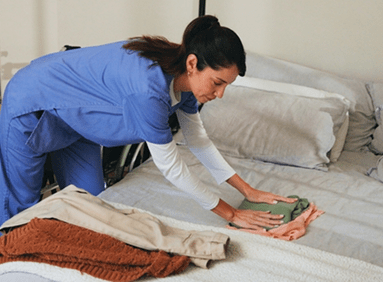
Domestic
Regular or one-off, tailored to your home.
- Kitchen & bathroom deep clean
- Vacuuming, mopping & dusting
- Laundry & bed linen change
- Eco-friendly products on request
NDIS
Personalised cleaning support for NDIS participants.
- Flexible scheduling around your plan
- Works with plan-managed & self-managed funding
- Products matched to sensitivities & preferences
- Consistent, familiar cleaners

Commercial
Reliable cleaning for offices, retail & medical spaces.
- After-hours & weekend availability
- Fully insured & compliant
- Custom cleaning schedules
- Ongoing or one-off contracts
Get Your Instant Cleaning Quote ▾
Open each section below, tell us a bit about the job, then send your enquiry using the form at the end — no price is shown, we’ll call you within 24 business hours to confirm everything.
▾🏠 Property Basics▾
Have a think about your property type (house, apartment, office, commercial, or Airbnb) and its size (studio/1 bed up to 5+ bed) — mention both in your message below.
▾🔁 How Often▾
One-off, weekly, fortnightly, monthly, or end-of-lease? Let us know your preferred frequency.
▾💰 Your Budget▾
A rough range helps us match you with the right service — under $80, $80–150, $150–250, $250+, or not sure yet. No obligation.
▾🧴 Products & Preferences▾
Should the cleaner bring their own products, or will you provide yours? Any allergies or product restrictions we should know about? Any preference on cleaner gender — female, male, or no preference?
Ready? Head down to the enquiry form and mention your answers above — we’ll take it from there.
Contact Us and Enquire Now!
Please choose the help you’d like to enquire about
Frequently Asked Questions
See All Frequently Asked Questions ▾
NDIS Frequently Asked Questions
Are NDIS services GST free?
Yes, most NDIS services are GST-free when delivered as part of a registered participant plan.
Are NDIS payments taxable?
No, NDIS payments are not considered taxable income.
Are NDIS providers not-for-profit?
Not necessarily. NDIS providers can be either not-for-profit or for-profit businesses.
Are NDIS properties a good investment?
NDIS properties can be profitable, but returns depend on location, demand, and management.
Are NDIS businesses profitable?
Yes, many are—success depends on service quality, compliance, and sustainable operations.
Are NDIS workers mandatory reporters?
Yes. In most states, NDIS workers must report suspected abuse or neglect.
Are NDIS payments means tested?
No. NDIS eligibility is based on disability needs, not income or assets.
Are NDIS supports GST free?
Yes, as long as they are delivered under a participant’s NDIS plan.
Are NDIS houses a good investment?
They can be, especially if built to SDA standards and in high-demand areas.
Are NDIS service agreements mandatory?
Yes. Service agreements are required to outline expectations and responsibilities.
Are NDIS and Centrelink linked?
They are separate systems, though some individuals may use both.
Are NDIS invoices GST free?
Yes, provided the services fall under a GST-exempt NDIS plan.
Are NDIS investments safe?
As with all investments, there is some risk. It’s best to seek financial advice.
Can Questions (Funding & Support Options)
Can NDIS help with housing?
Yes. NDIS may fund home modifications or specialized housing supports like SDA or SIL.
Can NDIS pay for rent?
Generally no—NDIS does not cover rent, but housing supports may assist.
Can NDIS help with a car?
NDIS may fund vehicle modifications, but not the purchase of a vehicle itself.
Can NDIS pay for an iPad or laptop?
Only if it’s deemed reasonable and necessary for disability-related use.
Can NDIS pay for gym membership?
Yes, if it supports health goals and is included in the NDIS plan.
Can NDIS cover tutoring?
It may cover tutoring when it supports developmental or functional goals.
Can NDIS help with moving house?
Yes, under certain circumstances related to disability needs or safety.
Can NDIS provide housing?
NDIS doesn’t provide homes but can fund supports to live independently.
Can NDIS providers charge GST?
No. Services under an approved plan are usually GST-free.
Can NDIS pay for medication?
Usually not. Medication is typically covered by the PBS, not NDIS.
Can NDIS pay for swimming lessons or childcare?
Yes, but only if related to the participant’s disability goals.
Can NDIS fund driving lessons or mobility equipment?
Yes, if the support is considered necessary for independence and approved in the plan.
How Questions (Access & Management)
How does the NDIS work?
The NDIS provides funding to support people with disability based on their individual needs.
How is the NDIS funded?
It’s funded by the Australian Government through general taxation.
How do I apply for NDIS?
Apply via the NDIS Access Request Form or call the NDIA directly.
How do I become a registered NDIS provider?
Apply through the NDIS Commission by meeting quality and compliance standards.
How do I self-manage my NDIS funding?
Choose self-management in your plan and track spending using the NDIS portal.
How do I claim consumables?
Submit claims through the portal using your consumables budget.
How much does NDIS cost to join?
There’s no cost to access the scheme if you’re eligible.
What Questions (Coverage & Eligibility)
What does NDIS fund?
Supports related to daily living, therapy, mobility, employment, and more.
What doesn’t NDIS fund?
Everyday expenses like groceries, rent, holidays, or items unrelated to your disability.
What services are GST free under NDIS?
Any support funded under a participant’s approved plan is GST-free.
What conditions are covered by NDIS?
It supports permanent disabilities that significantly impact daily functioning.
What does NDIS stand for?
National Disability Insurance Scheme.
When Questions (Timing & Rollout)
When did NDIS start?
It began in trial sites in 2013 and rolled out nationally by 2020.
When does NDIS funding stop or renew?
Usually after 12 months, unless otherwise stated in your plan. Renewal requires reassessment.
Who Questions (People Involved)
Who is eligible for NDIS?
Australian residents under 65 with a permanent and significant disability.
Who can be an NDIS support worker?
Anyone who meets legal screening and has suitable skills or experience.
Who funds the NDIS?
The Australian Government funds the scheme through taxes.
Who are NDIS providers?
Registered or unregistered businesses or individuals delivering disability supports.
Why Questions (Purpose & Criticism)
Why was the NDIS introduced?
To provide fair, person-centred support for Australians with permanent disabilities.
Why is NDIS funding slow or expensive?
Delays can occur due to administrative backlogs. Costs reflect complex and personalized care.
Will Questions (Specific Funding Items)
Will NDIS pay for a bed or mattress?
Yes, if it’s needed for mobility or medical reasons.
Will NDIS fund laptops, iPads, or tutoring?
Only if they are required to achieve the participant’s disability goals.
Will NDIS pay for driving lessons or gym?
Yes, with appropriate goals and plan approval.
Will NDIS fund security systems or noise-cancelling headphones?
Yes, if they relate directly to disability-related safety or sensory needs.
Frequently Asked Questions – Disability Support
Are disability support workers mandatory reporters?
Yes, in most cases, disability support workers are considered mandatory reporters and are legally required to report suspected abuse or neglect.
What are disability support payments?
These are financial benefits provided by the government to individuals with disabilities to help cover daily living expenses and care needs.
What are disability support services?
Disability support services include personal care, community access, therapy, transport, and support with everyday tasks to promote independence.
Are disability support workers essential workers?
Yes, disability support workers are classified as essential workers, especially during emergencies like the COVID-19 pandemic.
Are disability support workers health care workers?
They are not medical staff but are considered part of the broader health and care sector due to their role in supporting individuals’ well-being.
Are disability support workers getting a pay rise?
Pay rates may vary depending on the award, region, and enterprise agreements. Some sectors have seen increases in line with Fair Work rulings.
Can disability support workers get permanent residency (PR)?
Yes, under certain skilled migration pathways, disability support work is eligible for permanent residency in Australia.
Can disability support workers administer Schedule 8 (S8) medication?
Only if specifically trained and authorized under local laws and the client’s care plan.
Can disability support workers administer medication?
Yes, if they are trained and the medication is part of the approved care plan.
Can disability support workers administer insulin?
Yes, with proper training and consent from the client’s healthcare provider.
How much is the disability support pension?
The amount varies depending on personal circumstances, income, and assets. It is adjusted regularly by the government.
How to become a disability support worker?
You typically need a Certificate III in Individual Support or similar qualification, plus relevant checks (police, NDIS worker screening).
How much is disability support?
It depends on the program and eligibility – ranging from full pensions to hourly support funding via schemes like NDIS.
How much is the disability support allowance?
The allowance differs by country and scheme. In Australia, this refers to payments like the DSP (Disability Support Pension).
How to apply for the disability support pension?
You can apply through Services Australia, providing evidence of medical conditions and how they affect daily functioning.
How much is the disability support pension payment?
It is calculated based on your income, assets, and living situation, with regular adjustments for inflation.
How to get disability support?
You may be eligible through government programs like the NDIS, or local and private service providers.
How does the disability support pension work?
It provides financial assistance to people with long-term disabilities who are unable to work.
How much do disability support workers earn?
Wages vary by experience, location, and employer, typically ranging from $30–$40 per hour in Australia.
What does a disability support worker do?
They assist individuals with disabilities in daily tasks, personal care, transport, and community engagement.
What is the disability support pension?
It’s a government benefit for people who have a permanent physical, intellectual, or psychiatric condition that stops them from working.
What is a disability support worker?
A professional who supports people living with disability to live as independently as possible.
What is disability support?
Disability support refers to services, funding, or personnel assisting individuals with disabilities in their daily lives.
What is disability support work?
It involves supporting people with disability in areas such as personal care, mobility, communication, and social inclusion.
What is the disability support program?
It may refer to national or state-run services providing care, funding, and advocacy for people with disability.
Who is a disability support worker?
A trained individual who helps people with disabilities lead independent, fulfilling lives.
Who can claim the disability support pension?
Eligible Australian residents with a permanent disability that significantly impacts their ability to work.
Why become a disability support worker?
It’s a rewarding career where you make a real difference in someone’s life every day.
Why work in disability support?
Because it offers flexible, meaningful work that contributes directly to community well-being.
Why choose disability support work?
If you’re passionate about helping others and want a stable, in-demand job, it’s a great career path.
Why do I want to be a disability support worker?
Many choose this path out of compassion and a desire to support those in need of care and dignity.
Will the disability support pension increase?
It is reviewed regularly by the government and adjusted according to inflation and economic conditions.
Will disability pay child support?
In many jurisdictions, disability income may still be considered in child support calculations.
When will the disability support grant be paid?
It depends on the processing time of the relevant agency. Usually, grants are paid within a few weeks of approval.
Can I work while on the disability support pension?
Yes, but there are income limits. Earning over a certain amount may reduce your payment.
How much can I earn on the disability support pension?
As of current regulations, you can earn a limited income before your pension is affected. Check Services Australia for current thresholds.
Disability support for older Australians?
Yes, there are programs tailored to seniors, especially those transitioning from NDIS to aged care.
Disability support for children?
Children can receive NDIS support for early intervention, therapy, and daily life needs.
Disability support for autism?
Yes, autism is covered under the NDIS and support includes therapy, social skills training, and daily assistance.
Disability support for mental health?
Mental health conditions are often covered, especially if they result in long-term functional impairment.
Is the disability support pension taxable?
In most cases in Australia, the DSP is not taxable. However, other income may affect your tax.
What is disability support services?
Services designed to assist individuals with a disability in living as independently and inclusively as possible.
Disability support near me?
Use the NDIS provider finder or search platforms like MyCareSpace or Mable to locate providers in your area.

Subscribe our newsletter to
get latest updates
Services
Quick Links
Our Solidarity

